
Ligaments are strong bands of connective tissue that hold bones together and keep joints stable during movement. Whether you enjoy sports, exercise regularly, or simply lead an active lifestyle, healthy ligaments are essential for smooth joint function. A sudden twist, fall, accident, or sports injury can stretch or tear a ligament, leading to pain, swelling, and instability.
At Leela Health Care Orthopaedic Clinic, patients with ligament injuries undergo a thorough assessment to determine the severity of the damage and the most appropriate treatment. While some injuries heal with physiotherapy and rest, others require surgical repair to restore normal joint function and prevent long-term complications.
What Is a Ligament Injury?
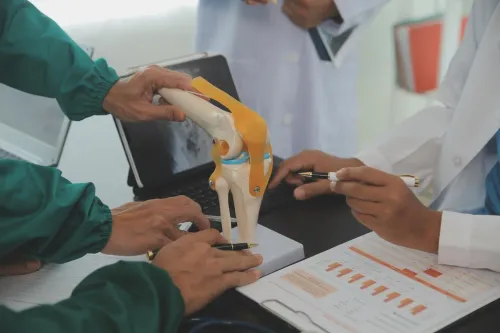
Ligaments provide stability by connecting one bone to another around a joint. When excessive force is applied, they can become stretched (sprained), partially torn, or completely ruptured.
The most commonly affected ligaments include:
- Anterior Cruciate Ligament (ACL)
- Posterior Cruciate Ligament (PCL)
- Medial Collateral Ligament (MCL)
- Lateral Collateral Ligament (LCL)
- Ankle ligaments
- Shoulder ligaments
The severity of the injury determines the treatment approach.
Common Causes of Ligament Tears
Ligament injuries can happen to anyone, not just athletes.
Some of the most common causes include:
- Sports such as football, cricket, badminton, and basketball
- Sudden twisting of the knee or ankle
- Road traffic accidents
- Falls on uneven surfaces
- High-impact exercise
- Workplace injuries
Even a seemingly minor injury can result in significant ligament damage if the joint twists unexpectedly.
Symptoms You Should Not Ignore
A ligament injury often produces symptoms immediately after the incident.
These may include:
- Sudden popping sensation
- Sharp pain around the joint
- Swelling within a few hours
- Bruising
- Difficulty walking
- Joint instability
- Feeling that the knee or ankle 'gives way'
- Reduced range of motion
Ignoring these symptoms may increase the risk of repeated injuries and damage to cartilage or surrounding structures.
How Is a Ligament Injury Diagnosed?
Accurate diagnosis is the first step toward effective treatment.
The orthopaedic specialist typically performs:
- A detailed medical history
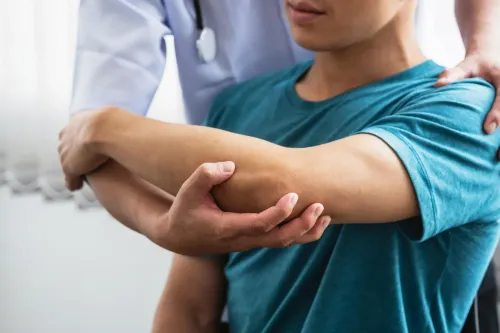
- Physical examination
- Stability tests
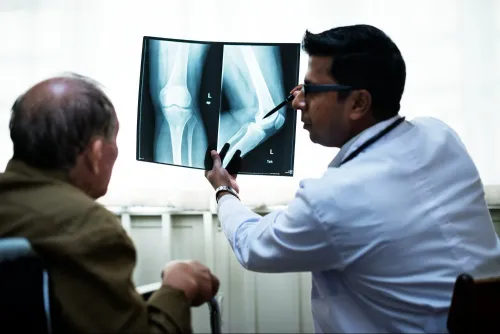
- Digital X-rays to rule out fractures
- MRI scans to assess ligament damage
- Functional assessment of joint movement
A complete evaluation helps determine whether the ligament can heal naturally or requires surgical repair.
When Is Ligament Repair Surgery Recommended?
Not every ligament injury needs surgery.
However, surgical treatment may be advised if:
- The ligament is completely torn.
- The joint remains unstable despite physiotherapy.
- You participate in sports or physically demanding work.
- Multiple ligaments are injured.
- There is associated cartilage or meniscus damage.
- Conservative treatment has not improved symptoms.
The goal is to restore joint stability and reduce the risk of future injuries.
Modern Ligament Repair Techniques
Orthopaedic surgery has advanced considerably over the years.
Depending on the injury, treatment may involve:
Ligament Reconstruction
The damaged ligament is replaced using a tendon graft from the patient or a donor.
Ligament Repair
In selected cases, the original ligament can be repaired instead of reconstructed.
Arthroscopic Surgery
Many ligament procedures are performed using minimally invasive arthroscopy. Small incisions and a tiny camera allow the surgeon to repair the injury with less tissue damage, reduced pain, and faster recovery compared to traditional open surgery.
Recovery After Ligament Surgery
Recovery depends on the ligament involved, the surgical technique used, and the patient's commitment to rehabilitation.
A typical recovery plan includes:
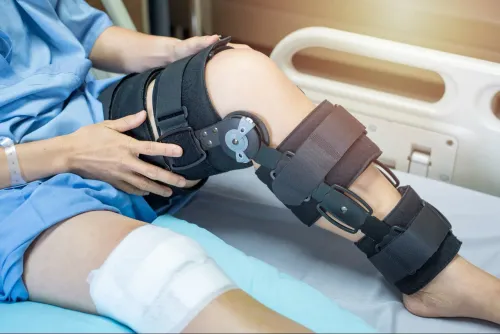
- Protecting the joint with a brace if required.
- Controlling swelling and pain.
- Gradual weight-bearing under medical supervision.
- Physiotherapy to restore flexibility.
- Strength training for surrounding muscles.
- Balance and coordination exercises.
- Progressive return to sports or regular activities.
Most patients regain good function with a structured rehabilitation programme, although complete recovery may take several months.
Can Ligament Injuries Heal Without Surgery?
Yes, many mild and moderate ligament injuries improve with conservative treatment.
Non-surgical options include:
- Rest
- Ice application
- Compression
- Elevation
- Anti-inflammatory medication
- Physiotherapy
- Activity modification
- Supportive braces
An orthopaedic evaluation helps determine whether these measures are sufficient or if surgery is the better long-term solution.
Finding Expert Orthopaedic Care Near JP Nagar
Residents of JP Nagar and neighbouring areas such as Banashankari 3rd Stage, Padmanabhanagar, RR Nagar, and Uttarahalli often seek timely treatment for sports injuries and ligament tears to avoid chronic joint instability. Early diagnosis and appropriate management can significantly improve recovery and help patients return to their daily routines with confidence.
Ligament injuries should never be dismissed as a simple sprain, especially when pain, swelling, or instability persists. Whether the treatment involves physiotherapy or surgery, prompt care plays a vital role in protecting joint health. With the right diagnosis, personalised treatment, and dedicated rehabilitation, most people can regain strength, stability, and return to an active, pain-free lifestyle.
Keywords