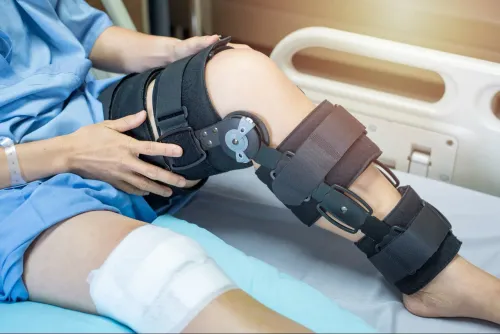

Knee arthritis often begins with seemingly manageable symptoms: discomfort after walking, stiffness after sitting for a long time, or pain while using stairs. As joint degeneration progresses, these problems may become more frequent. For selected patients, knee arthritis treatment with gel and PRP injections may be discussed as part of non-surgical management.
Neither treatment is appropriate for every painful knee. Understanding what these injections are intended to do is important before considering them.
What Causes Knee Arthritis Pain?
Osteoarthritis involves progressive changes in cartilage and other structures within the knee. Patients may experience pain, stiffness, swelling, reduced movement, or difficulty with weight-bearing activities.
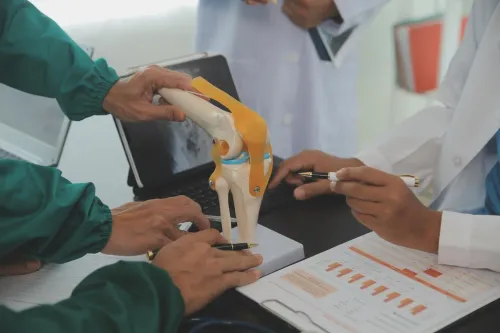
Before considering an injection, an orthopaedic specialist needs to establish whether arthritis is actually responsible for the symptoms. Meniscus injuries, ligament problems, inflammatory disorders, referred pain, and other conditions can produce similar complaints.
What Are Gel Injections?
Gel injections commonly refer to injections containing hyaluronic acid or related preparations. Hyaluronic acid is naturally present in joint fluid and contributes to lubrication and joint movement.
Viscosupplementation may be considered for certain patients with symptomatic knee osteoarthritis. Response varies considerably, and it should not be regarded as a method of rebuilding a severely damaged knee.
Some people experience symptom improvement, while others obtain little benefit. Clinical recommendations regarding these injections can also vary depending on patient characteristics and current evidence.
What Is PRP Treatment?
Platelet-rich plasma, commonly called PRP, is prepared from a patient's own blood. After processing, a concentrated platelet-containing preparation is injected into the targeted area.
PRP has been investigated for several musculoskeletal conditions, including knee osteoarthritis. Some selected patients may experience improvement in pain and function, but outcomes are variable and treatment should be considered only after appropriate assessment.
PRP should not be described as a guaranteed cure for arthritis or a replacement for joint replacement when structural damage is advanced.
Who Might Be Evaluated for Injection-Based Treatment?
The decision depends on factors such as:
- Severity and duration of symptoms
- Stage of arthritis
- Age and activity level
- Previous treatment
- Knee alignment and stability
- Associated injuries
- General medical condition
- Expectations from treatment
An examination and suitable imaging help determine whether an injection is reasonable or whether another approach is more appropriate.
Injections Are Only One Part of Arthritis Care
Effective knee arthritis management frequently involves more than one intervention.
Strengthening the muscles around the knee can improve support. Weight management may reduce mechanical stress in appropriate patients. Physiotherapy can address flexibility, strength, balance, and movement patterns. Activity modification can help patients remain active without repeatedly aggravating symptoms.
Medication may also be considered depending on medical history and professional advice.
For patients in Bengaluru, Leela Health Care Orthopaedic Clinic provides assessment for knee problems where treatment can be planned according to the cause and stage of symptoms rather than automatically proceeding to an injection.
When Might Other Treatment Be Necessary?
Injection treatment may be less suitable when arthritis is advanced and pain or disability is substantial. Severe deformity, major loss of joint space, persistent rest pain, or significant restriction of everyday activities may lead to discussion of other options.
That does not automatically mean surgery. It means the knee should be reassessed comprehensively.
Patients considering gel or PRP treatment should therefore ask a more useful question than simply, 'Which injection is better?' The better question is, 'What is causing my knee pain, how advanced is the problem, and which treatment fits this stage?'
That approach helps Bengaluru patients make decisions based on diagnosis and realistic expectations rather than choosing a procedure solely because it is described as minimally invasive.
Keywords