
Joint pain can gradually change the way a person walks, sleeps, works, exercises, and manages everyday activities. For many people, medicines, physiotherapy, activity modification, weight management, or injections provide meaningful relief. However, when arthritis becomes advanced and these measures no longer control symptoms, joint replacement may become a treatment option.
For patients in Bengaluru and other parts of Karnataka, understanding when joint replacement is considered can make discussions with an orthopaedic specialist more productive.
What Is Joint Replacement?
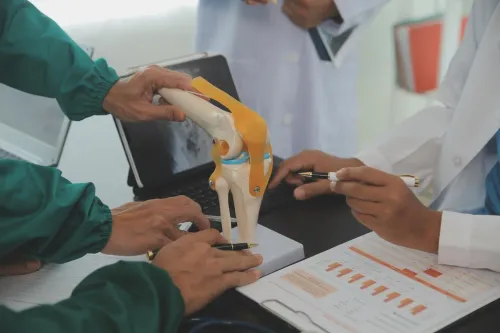
Joint replacement is an orthopaedic procedure in which severely damaged joint surfaces are replaced with artificial components designed to restore smoother movement. Knee and hip replacements are among the most commonly performed procedures.
The purpose of surgery is generally to reduce pain and improve mobility when significant structural joint damage is affecting quality of life.
Joint replacement is not automatically required simply because an X-ray shows arthritis. Orthopaedic surgeons usually consider several factors together, including symptoms, examination findings, imaging, general health, age, activity requirements, and response to previous treatment.
Signs That Arthritis May Be Affecting the Joint Significantly
An orthopaedic assessment may be appropriate when someone experiences:
- Persistent knee or hip pain during routine activities
- Difficulty walking reasonable distances
- Pain while climbing or descending stairs
- Significant stiffness after sitting or resting
- Reduced joint movement
- Night pain that interferes with sleep
- Increasing difficulty getting up from a chair
- Dependence on pain medicines for routine activity
- Progressive deformity around the affected joint
These symptoms do not necessarily mean that replacement surgery is required. They indicate that the cause and severity of the problem should be properly assessed.
What Happens Before Joint Replacement Is Recommended?
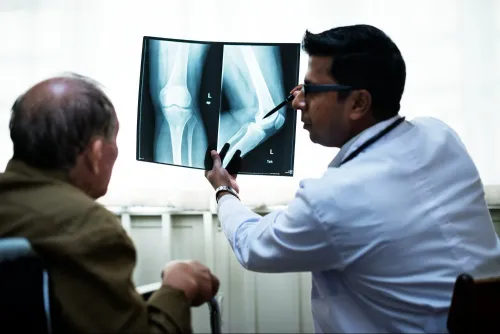
Evaluation normally begins with a detailed medical history and physical examination. The orthopaedic specialist may assess walking pattern, joint stability, alignment, swelling, range of motion, and the location of pain.
X-rays are commonly used to evaluate joint-space narrowing, deformity, bone changes, and other signs of arthritis. Additional investigations may occasionally be necessary depending on the patient's condition.
At Leela Health Care Orthopaedic Clinic, patients seeking joint care can undergo orthopaedic evaluation to determine whether continued conservative management or a surgical option deserves consideration.
Can Surgery Be Delayed?
Many patients with early or moderate arthritis can initially be treated without joint replacement.
Depending on the diagnosis, treatment may include physiotherapy, strengthening exercises, weight management, activity modification, appropriate pain medication, walking aids, or selected joint injections.
The important point is to match treatment to the individual rather than choosing surgery based only on age or an imaging report.
What Does Recovery Involve?
Recovery begins with a structured rehabilitation plan. Patients are usually encouraged to regain movement and walking ability progressively under professional guidance.
Rehabilitation may focus on:
- Restoring joint movement
- Improving muscle strength
- Developing a safe walking pattern
- Gradually increasing daily activity
- Preventing falls
- Following wound-care instructions
Recovery speed varies. Age, muscle strength, general health, type of procedure, pre-existing medical conditions, and participation in rehabilitation can all influence progress.
Making an Informed Decision
The decision about joint replacement should balance the severity of joint damage against how strongly symptoms interfere with daily life.
Someone who has mild radiographic arthritis but manageable symptoms may not need surgery. In contrast, a person with severe pain, restricted mobility, advanced structural damage, and poor response to conservative care may have a stronger reason to discuss replacement.
For Bengaluru patients, an individual orthopaedic assessment is therefore more useful than deciding based on symptoms or X-rays alone. Joint replacement is one part of a broader arthritis treatment pathway, and the appropriate time for surgery differs from one patient to another.
Keywords