Patients who are advised to consider orthopaedic surgery often ask whether a minimally invasive surgery option is available. Smaller incisions can be appealing, but incision size alone should never determine the choice of procedure.
The appropriate surgical approach depends on the condition being treated, the anatomy involved, technical requirements, patient health, and the surgeon's assessment.
What Does Minimally Invasive Surgery Mean?
In orthopaedics, minimally invasive techniques aim to perform a procedure while limiting unnecessary disruption of surrounding tissues.
Arthroscopy is one familiar example. A camera and specialised instruments allow certain joint procedures to be performed through relatively small portals.
Other orthopaedic operations may use tissue-sparing approaches without necessarily being arthroscopic.
Potential Advantages
When clinically appropriate, minimally invasive approaches may offer benefits such as smaller incisions and potentially reduced soft-tissue disruption.
However, these benefits vary substantially between procedures and patients.
It is misleading to assume that every minimally invasive procedure means:
- No pain
- No rehabilitation
- Immediate return to work
- No surgical risk
- Guaranteed faster recovery
Every operation has a healing period and potential complications.
When Is Conventional Surgery More Appropriate?
An open or more extensive approach may provide better access for certain complex fractures, deformities, revisions, reconstructions, or other conditions.
In these circumstances, choosing the smallest possible incision could actually make the operation technically more difficult without providing a meaningful patient benefit.
The priority should therefore be effective and safe treatment of the underlying condition.
Compare the Procedure, Not Just the Incision
When evaluating surgical options, patients can ask:
- What exactly is my diagnosis?
- Why is surgery being considered?
- Are non-surgical options still reasonable?
- Can the procedure be performed minimally invasively?
- What are the advantages in my particular case?
- What limitations should I expect afterward?
- How much rehabilitation is required?
These questions provide considerably more useful information than simply asking which method produces the smallest scar.
Recovery Still Depends on Internal Healing
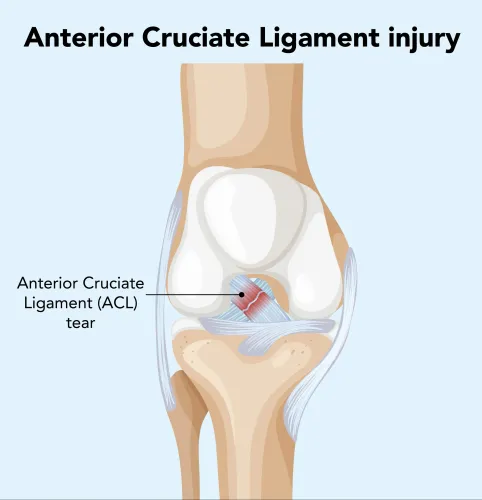
Suppose a ligament is reconstructed arthroscopically. The skin wounds may be small, but the reconstructed tissue still requires biological healing and structured rehabilitation.
The same principle applies to repairs performed around the shoulder or other joints. Patients must respect restrictions designed to protect healing structures.
This distinction is especially relevant for working adults and active patients in Bengaluru who may be eager to return to commuting, office responsibilities, driving, exercise, or sport.
Choosing the Appropriate Approach
Leela Health Care Orthopaedic Clinic evaluates musculoskeletal problems based on diagnosis and functional needs before discussing an appropriate treatment pathway.
A good surgical discussion should explain why a particular technique has been selected and what alternatives exist. Patients should also understand expected rehabilitation, potential complications, and realistic recovery milestones.
Minimally Invasive Does Not Mean Automatically Better
Modern orthopaedic techniques have made it possible to treat many conditions with less invasive approaches. That represents an important advancement, but the term 'minimally invasive' should not become a marketing shortcut.
A technically appropriate operation performed for the correct indication is more important than simply reducing incision length.
For Bengaluru and Karnataka patients comparing orthopaedic procedures, the sensible goal is to find the least disruptive approach that can adequately address the underlying condition while allowing safe recovery and rehabilitation.
Keywords